
10 Easy Ways to Organize Your Home and Reduce Everyday Clutter
Learning how to organize your home can make everyday life easier and more comfortable. A tidy home is easier to clean, and it helps you find things faster. However, clutter can build up when items do not have a proper place.
The good news is that you do not need a big budget or complicated systems. Instead, start with small changes and simple storage ideas. Here are 10 easy ways to organize your home and reduce everyday clutter.
1. Start with One Small Area
Organizing your whole home at once can feel difficult. Therefore, start with one small area.
Choose a drawer, shelf, cabinet, or table. Remove everything from that space and decide what you really need.
Once you finish one area, move to the next. As a result, the whole process will feel easier and more manageable.
2. Remove Things You Do Not Use
One of the best ways to organize your home is to reduce the number of unnecessary items.
Go through your belongings and separate them into three groups:
- Keep
- Donate or give away
- Throw away
If you have not used something for a long time, ask yourself if you really need it. Removing unused items creates more space for things you actually use.
3. Give Every Item a Place
Everyday clutter often happens because items do not have a fixed place.
For example, keep keys in a small tray near the entrance. Store kitchen tools in one drawer. Keep hair accessories in a small box or organizer.
When every item has a home, putting things away becomes much easier.
4. Use Storage Boxes
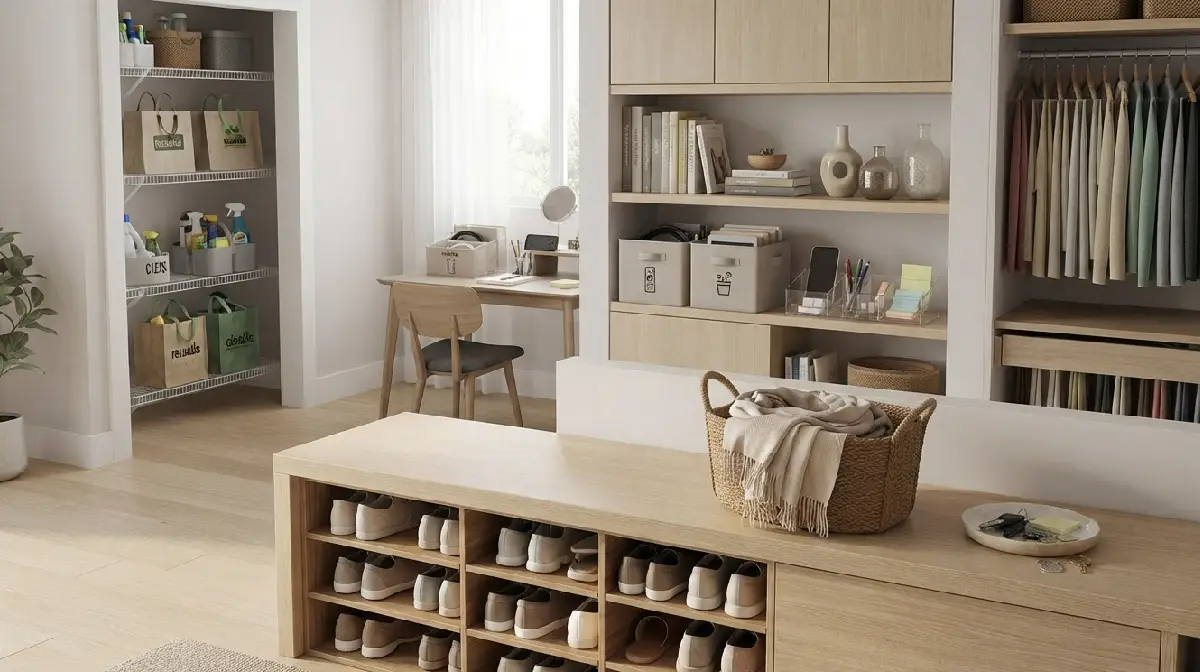
Storage boxes are simple tools for keeping your home neat. They can hold clothes, accessories, toys, documents, and household supplies.
Choose different sizes based on your storage needs. Stackable boxes can also help you use vertical space.
In addition, label the boxes so you can find your belongings quickly.
5. Organize Your Kitchen Cabinets
Kitchen cabinets can become cluttered very quickly. Start by removing everything and grouping similar items together.
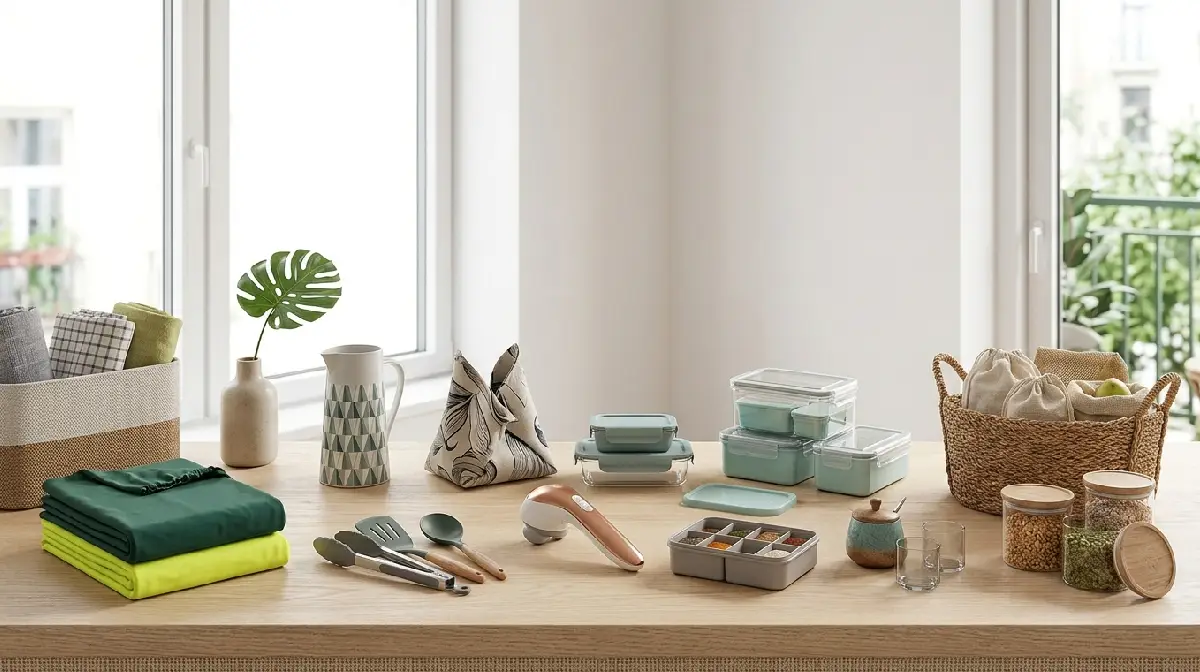
Keep plates with plates, glasses with glasses, and food containers in one area. You can also use storage jars for dry foods such as rice, flour, sugar, and snacks.
As a result, your kitchen will look cleaner and become easier to use.
6. Keep Daily-Use Items Easy to Reach
Items you use every day should be easy to access. This includes kitchen tools, clothing, bags, accessories, and other essentials.
Meanwhile, seasonal or rarely used items can be stored in higher cabinets or storage boxes.
This simple change saves time because you will not need to search through several storage areas.
7. Use Baskets for Small Items
Small items can quickly make a room look messy. Baskets provide an easy way to keep these items together.
You can use baskets for:
- Toys
- Towels
- Hair accessories
- Cleaning products
- Kitchen supplies
- Household items
Moreover, baskets can make open shelves look cleaner and more organized.
8. Make Better Use of Vertical Space
Do not focus only on floor space. Walls, shelves, cabinet doors, and other vertical areas can also provide useful storage.
For example, shelves can hold books, storage boxes, jars, and decorative items. Hooks can also be useful for bags, scarves, and lightweight accessories.
Therefore, using vertical space can help you organize your home without making rooms feel crowded.
9. Keep Tables and Counters Clear
Tables and counters can become cluttered during the day. Mail, bags, kitchen items, and other products often end up in these areas.
At the end of the day, take a few minutes to put everything back in its proper place.
A clear table or counter can make a room look instantly cleaner. In addition, it gives you more space for daily activities.
10. Create a Simple Daily Routine
Good organization does not happen only once. It needs a little regular attention.
Spend five to ten minutes each evening putting items away. Fold loose clothes, clear surfaces, return kitchen products, and organize small items.
Furthermore, choose one day each week for a quick home check. This helps stop clutter from building up again.
How to Organize Your Home Room by Room
Different rooms need different storage methods. Therefore, use simple systems that match each space.
Bedroom
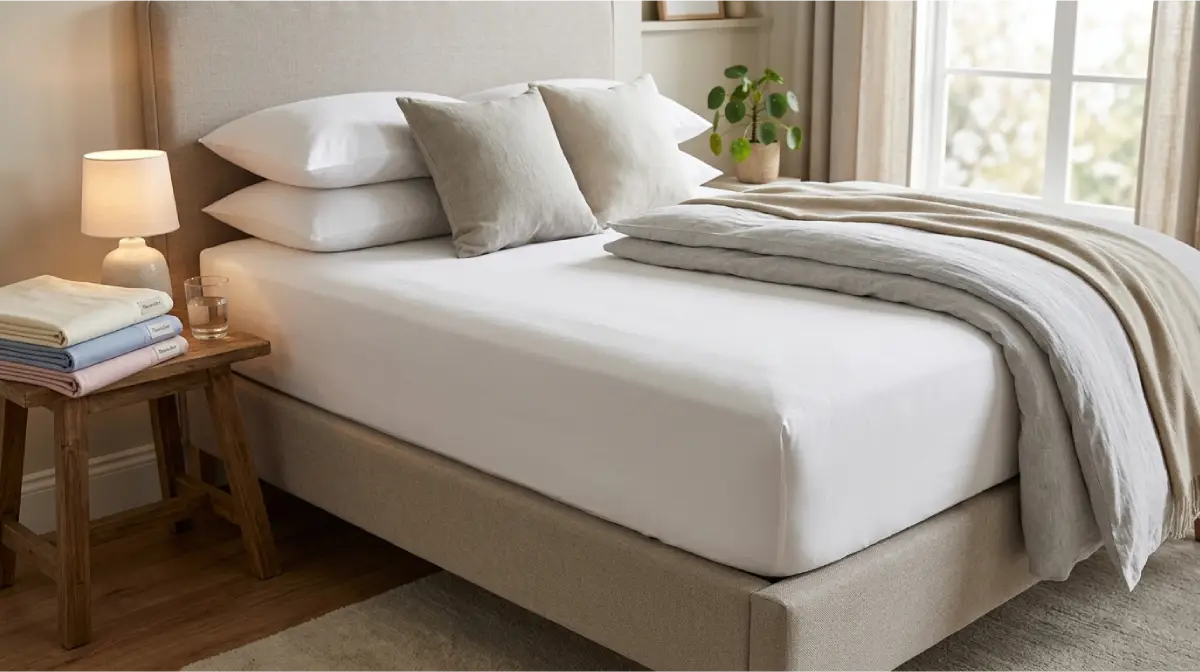
Keep clothes, shoes, accessories, and bedding in separate areas. Use small organizers for jewelry and hair accessories.
Kitchen
Group similar products together. Use containers, storage jars, baskets, and cabinet organizers to save space.
Living Room
Keep remote controls, books, blankets, and small items in baskets or storage areas. Also, avoid filling every table and shelf.
Bathroom
Use small containers or baskets for toiletries, hair products, and other personal items. Keep daily-use products within easy reach.
Easy Habits to Reduce Everyday Clutter
Small habits can make a big difference. Try these simple ideas:
- Put items away after using them.
- Avoid buying things you do not need.
- Clean one small area every day.
- Keep storage boxes labeled.
- Donate items you no longer use.
- Keep frequently used items easy to reach.
- Clear tables and counters before going to bed.
These habits make it easier to organize your home and maintain a neat space.
Benefits of an Organized Home
A well-organized home can make daily routines smoother. You spend less time looking for things and more time enjoying your space.
Also, cleaning becomes easier when there is less clutter. You can quickly wipe surfaces, clean shelves, and arrange your belongings.
Most importantly, an organized home can feel more peaceful and comfortable.
Final Thoughts
You do not need complicated storage systems to organize your home. Start small, remove unnecessary items, and give everything a proper place.
Use storage boxes, baskets, shelves, and containers to make better use of your space. Then, follow a simple daily routine to keep clutter under control.
With these easy steps, you can create a cleaner, neater, and more comfortable home one area at a time.

Add a review
Your email address will not be published. Required fields are marked *